
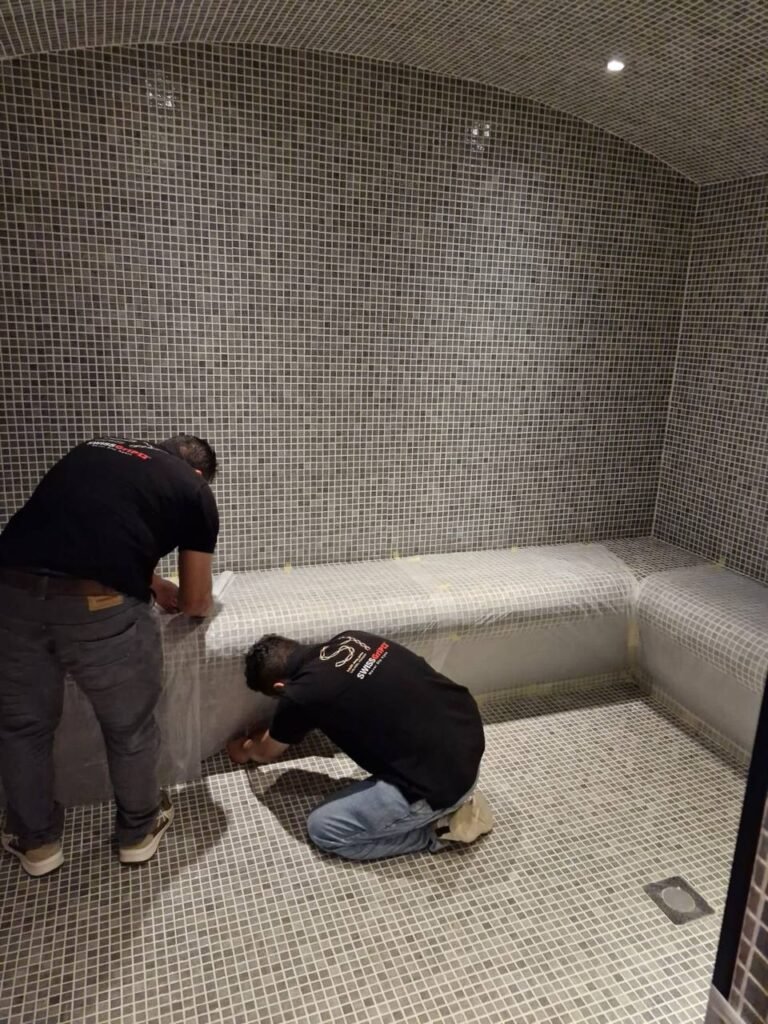
Slippery floors, wet bathroom tiles, shower trays, pool areas, stairs, and walkways can become serious safety risks. A good anti-slip coating helps improve grip without replacing the existing surface. This makes it a practical solution for homes, hotels, hospitals, wellness centers, commercial buildings, industrial areas, and public facilities.
At Salasel Youssef Trading, we provide SwissGrip anti-slip solutions in Saudi Arabia for residential, commercial, and industrial safety needs. SwissGrip is known for its transparent, surface-friendly, water-based anti-slip coating technology that can be applied to many slippery surfaces while keeping the original look of the floor, tile, bathtub, or walkway.
This guide explains how anti-slip coatings are applied and what happens during a professional SwissGrip-style application.
What Is an Anti-Slip Coating?
An anti-slip coating is a protective layer applied over an existing surface to increase slip resistance. It is commonly used on wet or smooth areas such as bathrooms, showers, bathtubs, ceramic tiles, marble, concrete, pool decks, stairs, ramps, commercial kitchens, hospitals, hotels, and public walkways.
Unlike temporary anti-slip tapes or rubber mats, a high-quality anti-slip coating bonds to the surface and creates a safer walking or standing area. SwissGrip coatings are designed to be almost invisible, easy to clean, and suitable for areas where appearance and hygiene matter.
Where Can Anti-Slip Coatings Be Applied?
Anti-slip coatings can be used in many high-risk areas where people may slip, especially when the surface becomes wet.
Common application areas include bathrooms, shower trays, bathtubs, swimming pool surroundings, hotel spa areas, hospital floors, clinic walkways, kitchens, entrances, stairs, ramps, balconies, yacht decks, boat surfaces, wooden walkways, and industrial floors.
The right product and application method depend on the surface type, level of foot traffic, exposure to water, and required slip-resistance class.
Step 1: Surface Inspection
Before applying any anti-slip coating, the surface should be inspected carefully. The installer checks the material, current condition, water exposure, previous coatings, cracks, loose tiles, dirt buildup, grease, soap residue, and cleaning history.
This step is important because anti-slip coatings need a clean and stable surface to bond properly. A bathroom shower tray is different from a hotel pool deck, and a wooden walkway is different from marble or ceramic tile. Professional inspection helps choose the right SwissGrip solution for the surface.
Step 2: Deep Cleaning and Surface Preparation
Cleaning is one of the most important parts of anti-slip coating application. The surface must be free from oil, dust, soap, detergent residue, scale, grease, wax, loose dirt, and moisture.
For bathrooms, tiles, tubs, and shower trays, the surface is wiped and cleaned before coating. For larger floors or wooden surfaces, a deeper cleaning process may be needed. This may include machine cleaning, pressure washing, or surface preparation depending on the project.
If the surface is not cleaned properly, the coating may not bond as expected. That is why SwissGrip-style application focuses strongly on preparation before the coating is applied.
Step 3: Masking the Edges
After cleaning, the areas that should not be coated are protected with masking tape or film. This may include edges, joints, drains, wall lines, fittings, decorative sections, or borders.
Masking helps create a clean finish and protects nearby areas. It also allows the installer to control exactly where the anti-slip coating is applied. In some projects, masking can also be used to create specific coated zones or safety strips.
Step 4: Mixing the Coating Components
SwissGrip uses a two-component coating system for many applications. This means the main coating material is mixed with a hardener before application.
The mixture must be stirred properly so the coating performs as intended. Once mixed, the coating should be applied within the correct working time. This step should be handled carefully because incorrect mixing can affect durability, adhesion, and finish quality.
Step 5: Applying the Anti-Slip Coating
The coating is then applied evenly over the prepared surface. For small areas such as bathtubs, shower trays, and tiles, the coating is commonly applied with a roller. The roller is moved in more than one direction to create an even layer and proper coverage.
For larger areas or some wooden surfaces, spraying may be used. Smaller surfaces can also be rolled in a criss-cross pattern, similar to painting a wall. The goal is to create a consistent anti-slip layer without heavy patches, gaps, bubbles, or uneven texture.
A professional installer pays attention to coating thickness, direction, coverage, room temperature, ventilation, and surface conditions.
Step 6: Removing Tape and Letting the Surface Dry
After application, the masking tape is removed carefully. Then the surface must be left untouched during the drying period.
For many bathroom applications, SwissGrip requires about 12 hours of drying before the treated surface can be used. During this time, the surface should not be touched, walked on, or exposed to water.
For larger flooring or special surfaces, drying and full curing time may vary. Some surfaces may be walkable after drying but need more time before heavy use or mechanical cleaning. Always follow the product instructions and professional guidance for the specific project.
Step 7: Final Check and Safe Use
Once the coating has dried, the treated surface should be checked for coverage, finish, grip, and cleanliness. In commercial or public facilities, slip-resistance testing may also be recommended to confirm performance.
After the correct drying period, the surface can be used again. The treated area should offer improved slip resistance while keeping the original surface appearance as much as possible.
How Long Does Anti-Slip Coating Application Take?
The application time depends on the size and condition of the surface. A small shower or bathtub may be coated relatively quickly after preparation. Larger commercial areas, pool surroundings, hotel floors, hospital corridors, or industrial walkways may need more time for cleaning, masking, coating, drying, and inspection.
The biggest factor is not only the coating time. Surface preparation and drying time are just as important for long-lasting performance.
Why Professional Application Matters
Anti-slip coating may look simple, but correct application requires experience. The surface must be cleaned correctly, the right product must be selected, the coating must be mixed properly, and drying conditions must be controlled.
Professional application helps avoid common problems such as poor adhesion, uneven coating, visible marks, weak grip, early wear, or water damage before curing.
For hotels, hospitals, clinics, swimming pools, commercial buildings, and public facilities, professional installation is especially important because slip safety affects guests, patients, staff, visitors, and legal responsibility.
How to Maintain an Anti-Slip Coated Surface
After the coating has fully cured, regular cleaning helps maintain performance. Use normal bathroom or floor cleaners that are suitable for the surface. Avoid harsh tools, aggressive scraping, or chemicals that are not recommended by the coating provider.
In high-traffic areas, regular inspection is useful. If the surface is used in hotels, pools, hospitals, or industrial facilities, maintenance should be part of the safety plan.
Benefits of SwissGrip Anti-Slip Coatings
SwissGrip anti-slip coatings are designed to improve surface safety without major renovation. They can help reduce the risk of slipping on wet and smooth surfaces, while keeping the existing tile, bathtub, shower tray, wood, or floor surface visible.
Key benefits include transparent appearance, improved slip resistance, surface-friendly application, water-based technology, hygiene support, easy cleaning, and use across residential, commercial, healthcare, hospitality, pool, marine, and industrial environments.
When Should You Apply Anti-Slip Coating?
You should consider anti-slip coating if a surface becomes slippery when wet, people feel unsafe walking on it, accidents have already happened, or the area is used by children, elderly people, patients, hotel guests, workers, or the public.
Bathrooms, showers, pool decks, ramps, stairs, entrances, kitchens, and hospital floors should never be ignored when they become slippery. Applying the right anti-slip solution early can help prevent injuries and improve confidence for everyone using the space.
Get Professional Anti-Slip Coating in Saudi Arabia
If you want to make bathrooms, tiles, showers, pool areas, stairs, walkways, or commercial floors safer, Salasel Youssef Trading can help you choose the right SwissGrip anti-slip solution.
Our team supports residential, commercial, industrial, hospitality, healthcare, and public facility projects across Saudi Arabia. Contact Salasel Youssef Trading to request an assessment and learn which anti-slip coating is suitable for your surface.
FAQs About Applying Anti-Slip Coatings
Can anti-slip coating be applied to old tiles?
Yes, anti-slip coating can often be applied to existing tiles if the surface is stable, clean, and suitable for coating. The surface must be inspected and prepared before application.
Does anti-slip coating change the look of the floor?
SwissGrip anti-slip coatings are designed to be almost invisible on many surfaces. They help improve grip while preserving the original appearance as much as possible.
Can anti-slip coating be used outdoors?
Yes, selected anti-slip coatings can be used outdoors on areas such as pool decks, ramps, walkways, stairs, and outdoor tiles. The right product must be chosen for the environment.
How long should the surface stay dry after application?
Drying time depends on the product and surface. For many SwissGrip bathroom applications, the surface should stay dry and unused for about 12 hours.
Is anti-slip coating better than anti-slip tape? Anti-slip tape can be useful for temporary or limited areas, but a professional anti-slip coating gives a cleaner, longer-lasting, and more hygienic finish for many wet and smooth surfaces.